

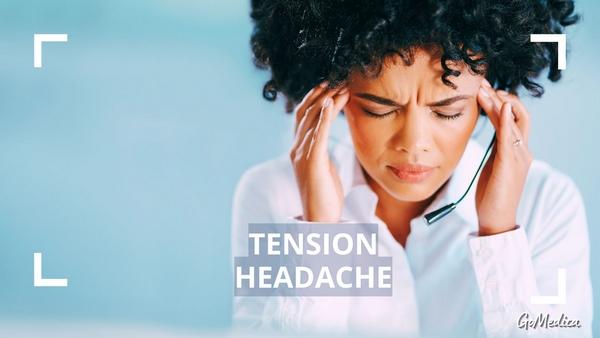
That tight, pressing band around your forehead? The dull ache that makes it hard to focus?
You want it gone, fast and without reaching for another pill.
Tension headaches, often triggered by stress, poor posture, or screen time, don't have to ruin your day.
Science-backed natural strategies can break the cycle of pain, both in the moment and for the long term.
Whether you're searching for how to relieve a tension headache fast, looking for natural remedies for tension headaches that actually work, or simply asking yourself "what do you do for headaches" when you can't take medication, this guide has you covered.
We'll explore everything from quick acupressure techniques to long-term preventive supplements and answer common questions like "does caffeine help or worsen a headache?" and "what is causing my tension headaches?"
In 30 Seconds: Your Tension Headache Relief Checklist
- Immediate relief: Apply firm pressure to the GB20 points at the base of your skull (2-minute acupressure technique).
- Temperature therapy: Cold pack on forehead + warm compress on neck for muscular tension - or try the classic contrast method: cold on the back of the neck and warm water on your feet.
- Reset your nervous system: 4-6-6 breathing (inhale 4s, hold 2s, exhale 6s) for 10 cycles.
- Natural remedies: A cup of peppermint or ginger tea, a few drops of lavender oil massaged into your temples, or a 20-minute rest in a darkened room.
- Prevention: Daily magnesium bisglycinate to reduce nerve excitability and muscle tension.
- Trigger audit: Check your posture, hydration, and screen time, these are the most common culprits.
This guide cuts through the noise.
You'll discover actionable techniques for immediate relief and targeted supplements for prevention, based on the latest understanding of why these headaches happen.
The approach recommended by leading health authorities like the Cleveland Clinic and Mayo Clinic emphasizes combining acute relief strategies with long-term lifestyle changes - exactly what you'll find here.
Part 1: Immediate Relief - How to Stop a Tension Headache Fast
When the pressure builds, you need solutions that work in minutes.
These home remedies for headaches are the most effective first-line strategies and they're all backed by both traditional wisdom and modern science.
1. The 2-minute acupressure technique (Most effective)
Acupressure stimulates key points to release muscle tension and promote circulation.
This is one of the most frequently recommended natural remedies for tension headaches, and for good reason, it works almost immediately.
Follow these three steps:
Point 1: The Neck Reliever (GB20 - "Wind Pool")
- Location: In the hollows at the base of your skull, just beside the large vertical neck muscles - a classic tension headache base of skull and neck relief point.
- Method: Tilt your head forward slightly. Press upward firmly with both thumbs. Apply deep, circular pressure for 2 minutes.
You should feel a release in the neck and scalp.

Point 2: The Third Eye Calmer (Yintang)
- Location: Directly between your eyebrows, at the bridge of your nose.
- Method: Use your index finger to apply moderate, steady pressure. Breathe deeply.
Hold for 2 minutes to soothe forehead tension and calm the mind.

Point 3: The Crown Point (DU20 - "Hundred Convergences")
- Location: At the very top of your head. Find it by drawing an imaginary line from the tip of one ear to the other.
- Method: Press firmly with your index finger. Hold or make small circles for 2 minutes.
This can alleviate that "tight cap" sensation.

2. Strategic temperature therapy
- Use a warm compress: If your pain feels muscular (tight neck, shoulders), apply a warm pad to the back of your neck and shoulders for 15-20 minutes.
This relaxes contracted muscles, an excellent tension headache self-care technique.
- Use a cold pack: If the pain is a throbbing, prominent headache, apply a cold pack wrapped in a cloth to your forehead or temples for 15 minutes.
This can constrict blood vessels and dull the pain signal.
- Try the contrast method: Many people find remarkable relief by applying a cold pack to the back of the neck while simultaneously soaking their feet in warm water.
This contrast therapy helps draw blood flow downward, reducing pressure in the head.
3. Hydration, gentle neck stretches, and breathing reset
Often, dehydration subtly worsens tension.
Drink a full glass of water; adding a pinch of sea salt can help replenish electrolytes and improve absorption.
Then, perform gentle neck stretches: slowly tilt your ear toward each shoulder, holding for 15 seconds on each side.
Roll your shoulders backward in slow circles.
These simple movements release accumulated tension in the upper trapezius muscles.
Finally, practice diaphragmatic breathing: Inhale slowly through your nose for 4 counts, letting your belly expand. Hold for 2. Exhale slowly through your mouth for 6 counts. Repeat for 10 cycles.
This directly counters the stress response that fuels headaches.
It's one of the most effective natural remedies to relieve all types of headaches.
4. Additional natural remedies for rapid relief
If the steps above haven't fully resolved your discomfort, these additional natural remedies for tension headaches can provide that extra layer of relief:
- Aromatic support: Apply a drop of peppermint oil or lavender oil diluted in a carrier oil to your temples and gently massage in circular motions.
Peppermint provides a cooling, analgesic effect, while lavender calms the nervous system.
- Warm herbal tea: Sip a cup of peppermint tea, ginger tea, or chamomile tea.
Ginger has natural anti-inflammatory properties, while chamomile promotes relaxation and better sleep.
- A brief rest: If possible, lie down in a darkened, quiet room for 15-20 minutes.
This simple act can significantly reduce sensory overload and allow your nervous system to reset.
Part 2: Long-Term Prevention and Treatment
For those with frequent headaches, addressing the root cause is key.
If you're experiencing morning tension headaches every day, or headaches on 10 or more days per month, it's time to move beyond acute relief and focus on prevention.
Research emphasizes that effective natural tension headache prevention requires a multi-faceted approach.
Studies on caffeine as an analgesic adjunct have shown that small amounts can enhance pain relief, but overuse leads to rebound headaches, a delicate balance worth understanding.
These supplements are backed by clinical research for prevention and frequency reduction - the kind of natural remedies for tension headaches that actually make a measurable difference over time.
For nervous system and muscle relaxation
Magnesium (Bisglycinate Form)
- The Science: Magnesium deficiency is linked to increased headache frequency.
It regulates nerve transmission and muscle relaxation. - Dosage: 200-400 mg of magnesium bisglycinate daily (aff).
This form is highly absorbable and gentle on the stomach. - Best for: Preventing the muscle tightness and nerve excitability that trigger headaches.
Vitamin B12 (Methylcobalamin)
- The Science: B vitamins, especially B12, are crucial for healthy nerve function and can modulate the body's stress response in neurons.
- Dosage: 1,000 – 2,000mcg of methylcobalamin (the active form) daily for a 2-4 week course, or as directed by a practitioner.
- Best for: Individuals under high stress or with a history of nerve-related tension.
For reducing inflammation and frequency
Coenzyme Q10 (Ubiquinol)
- The Science: A potent antioxidant.
A 3-month study on headache disorders showed 300mg daily (100mg 3x daily) significantly reduced headache frequency and severity.
While studied in migraine, its mechanisms for cellular energy and reducing neurogenic inflammation are highly relevant for tension headaches. - Dosage: 100mg of co-enzyme Q10 daily (aff).
- Note: Consult a doctor if you are diabetic, on blood thinners, or pregnant.
Turmeric (Curcumin)
- The Science: A powerful natural anti-inflammatory, curcumin can help reduce the inflammatory pathways involved in chronic pain, including headaches.
- Dosage: 500-1,000mg of a curcumin supplement daily (aff).
- Best for: Replacing or reducing reliance on OTC anti-inflammatories.
Vitamin D3
- The Science: Deficiency is a recognized risk factor for chronic headaches. It plays a role in neuroregulation and inflammation.
- Dosage: 2,000 – 4,000IU daily, or 10,000IU weekly.
Opt for D3 (cholecalciferol) with a fatty meal for best absorption (aff). - Best for: Anyone, especially in winter or with limited sun exposure, to address a common deficiency linked to pain.
Melatonin
- The Science: Often recommended for sleep regulation during stress, which is a major headache trigger.
It possesses anti-inflammatory and antioxidant properties.
Some studies show abnormal secretion in headache patients and improvement with supplementation. - Dosage: A 2mg supplement taken 30-60 minutes before bedtime can improve sleep quality and leverage its anti-inflammatory effects (aff).
- Best for: Individuals whose tension headaches are clearly linked to poor sleep or high stress.

Part 3: Understanding Tension Headaches
Knowing what you're dealing with helps you choose the right remedy.
If you've ever asked yourself "what is causing my tension headaches?" or wondered "can tension headaches be linked to hypothyroidism?", this section will give you clarity.
Understanding the underlying mechanisms is the first step toward effective tension headache relief.
What really causes a tension headache?
The old theory of pure "muscle contraction" has evolved. Current research points to a neurological hypersensitivity.
The trigeminal nerve, which carries sensations from your head and face, becomes overly sensitive.
This, combined with tightened muscles in the neck and scalp (often from stress or posture), lowers your pain threshold.
The pain is real, it originates from sensitized tissues around the skull.
Emerging research on eyeball tracking exercises suggests that eye muscle fatigue from prolonged screen use may contribute significantly to tension headaches.
Taking regular visual breaks and practicing gentle eye movements can be a valuable addition to your prevention toolkit.
Additionally, many people wonder: "is my TMJ causing my tension headaches?" and the answer is often yes.
Bruxism (teeth grinding) and temporomandibular joint dysfunction are frequently overlooked contributors to chronic head pain.
Episodic vs. chronic tension headaches
The frequency of your tension headaches isn't just a detail, it determines their classification and guides the most effective management strategy.
- Episodic tension headaches: These are the most common form, occurring infrequently, typically fewer than 12 days per year.
You might experience them occasionally, around once a month, often linked to an identifiable trigger like a stressful day or poor sleep.
- Frequent episodic tension headaches: When headaches become a more regular nuisance, happening on 10 or more days per month for at least three months, they are classified as frequent episodic.
This pattern signals a need for proactive prevention, not just in-the-moment relief.
- Chronic tension headaches: This is the most challenging form, defined by headaches occurring on 15 or more days per month for at least three months.
Chronic tension headaches often evolve from the frequent episodic type and can be resistant to over-the-counter pain relievers.
Importantly, they frequently coexist with migraines, a condition known as "mixed headache disorder," which requires a carefully tailored approach.
If your headaches are frequent or chronic, simply treating the pain when it strikes is rarely enough.
This classification underscores the need for the dual strategy outlined in this guide: immediate techniques for acute pain and long-term lifestyle and supplemental changes to address the underlying causes and reduce overall frequency.
Tension headache vs. migraine: A quick guide
Understanding the difference is crucial.
While both are headaches, their management differs significantly which is why tension headache relief isn't the same as migraine relief.
If you've ever searched for "what's the key difference between managing a tension headache and a migraine?", here's your answer:
| Feature | Tension Headache | Migraine |
|---|---|---|
| Pain | Dull, aching pressure; "tight band" | Throbbing, pulsating |
| Location | Both sides (bilaterally) | Often one side |
| Intensity | Mild to moderate | Moderate to severe |
| Other Symptoms | Tense neck/shoulders | Nausea, light/sound sensitivity, aura |
Common triggers to identify and manage
If you're serious about how to relieve tension headaches naturally, you need to identify your personal triggers.
These are the most frequently reported:
- Posture: Hunched shoulders, forward head position (from computers/phones) - a leading cause of tension headache from eye strain and neck tension.
- Eye strain: Uncorrected vision or prolonged screen use.
- Stress and anxiety: The most common trigger.
- Dehydration and diet: Skipping meals, excessive caffeine, or alcohol.
If you're wondering "does caffeine improve or worsen a headache?", the answer is both: a small amount can help (studies show it can act as an analgesic adjunct), but overuse leads to rebound headaches. - Sleep: Both poor quality and lack of sleep.
Your Action Plan for Lasting Relief
- For the next headache: Don't wait. Immediately try the 2-Minute Acupressure Technique (Point 1 on the neck is often the most effective).
Follow with a warm compress on your neck and deep breathing.
If needed, add a drop of peppermint oil to your temples and sip a cup of ginger tea. - For frequent headaches (1-2x/week or more): Start a daily magnesium bisglycinate supplement.
It's the foundational nutrient for headache prevention with a strong safety profile.
Stay consistently hydrated and practice daily neck stretches. - For chronic issues: Consider adding CoQ10 or Curcumin for 2-3 months to reduce underlying inflammation.
Crucially, audit your triggers: Set screen time reminders to check your posture, manage stress with daily breathwork or walking, and prioritize sleep.
Your Natural Relief Plan
Tension headaches are not inevitable.
By understanding their root cause - nerve sensitivity combined with muscle tension - you can take effective action.
The winning strategy works on two levels:
- For a flare-up: Use immediate techniques like the 2-minute acupressure method, temperature therapy, aromatherapy, and herbal teas.
- For the long term: Address the root cause with key supplements (like magnesium) and manage your triggers (posture, stress, sleep).
Start with just one action today.
The key to lasting relief is in your hands.
FAQ: Tension Headache Relief
What's the fastest natural way to get rid of a tension headache at home?
For the fastest relief, begin with the 2-minute acupressure technique targeting the GB20 points at the base of your skull.
This directly releases neck and scalp tension.
Complement this with a warm compress on tight shoulders or a cold pack on the forehead for throbbing pain.
These methods work faster than waiting for a supplement to take effect.
How can I prevent tension headaches naturally and long-term?
Effective long-term prevention combines lifestyle and supplementation.
Prioritize ergonomic posture, daily stress management (like yoga or meditation), and consistent hydration.
For many, taking a daily magnesium glycinate supplement is the most impactful step to reduce nerve excitability and muscle tension over time.
Are tension headaches linked to diet or exercise?
Diet: Yes. Common triggers are processed foods with additives (like MSG), alcohol, and excess caffeine.
Incorporating magnesium-rich foods (almonds, spinach) can be protective.
Exercise: Moderate, regular activity (walking, swimming) is excellent for prevention.
However, sudden, intense exertion can trigger a headache.
The key is consistency and listening to your body.
Can tension headaches be hereditary or different for women?
Hereditary: They are not directly inherited like migraines can be.
However, a genetic predisposition to stress sensitivity or muscle tension can be passed down, increasing your susceptibility.
For women: The core remedies are equally effective. However, hormonal fluctuations are a significant unique trigger.
Tracking your cycle and potentially increasing magnesium intake pre-menstrually can offer targeted prevention.
What's the key difference between managing a tension headache and a migraine?
Management differs because the underlying mechanisms vary.
Tension headache strategies focus on muscle relaxation and nervous system calm (acupressure, posture correction, magnesium).
Migraine strategies must additionally address neurological excitability and vascular changes, often involving different supplements.
Their triggers and immediate relief techniques are distinct.
What happens if chronic tension headaches go untreated?
Leaving them untreated can significantly impact well-being, leading to reduced quality of life, sleep disturbances, and emotional fatigue.
There is also a risk of developing medication-overuse headaches from frequent painkiller use.
In some cases, they can evolve into more complex chronic daily headaches or mixed conditions with migraines.
This underscores the importance of the proactive, two-tiered approach outlined in this guide.
* Last updated: August 2026