


Finding the right essential oil for pain relief is easy.
Finding the right dosage is another story.
Most blogs say: "Add a few drops to coconut oil."
What does "a few" mean? Two drops? Seven? A whole dropper?
After testing 30 essential oil blends for chronic back pain, headaches, arthritis, and sciatica, I learned one thing: dilution is the difference between relief and a chemical burn.
In this guide, you'll get:
- The 10 best essential oils for different types of pain
- The exact number of drops per teaspoon of carrier oil
- How many minutes until relief (realistic timing, not marketing hype)
- Which oils to avoid for your specific condition
Let's start with the mistake I made that you won't have to:
I once put 10 drops of pure peppermint oil on my lower back. It burned for hours, and my back still hurt.
That's when I realized dilution isn't a suggestion but the key to making essential oils work for pain.
Before you read this guide (please read this)
The mistake I see people make:
They use essential oils without a carrier oil.
Or they use too much carrier oil and wonder why nothing happens.
The golden ratio I use for most body pain:
→ 12-18 drops of essential oil per 1 ounce (30 ml) of carrier oil
That's it.
That's what took me 18 months to learn.
Now let me show you exactly which oils work for which pain with the precise dosage that worked for me.
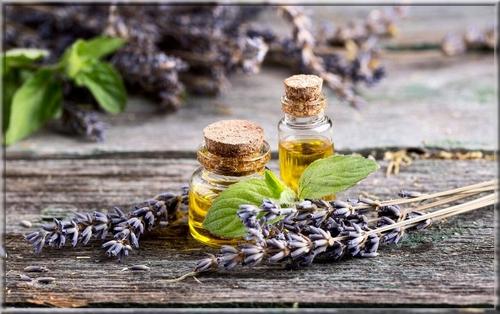
1. Lavender oil - The only one that helps my tension headaches
I get tension headaches behind my eyes.
They start in my shoulders. They creep up my neck. And by 3 PM, I can't focus.
Lavender oil is the only thing that stops them without making me drowsy.
The exact dosage I use
→ 2 drops lavender + 2 drops peppermint + 1 teaspoon coconut oil
I massage this into my temples and the back of my neck.
Not hard. Just gentle circles.
How long until relief
About 15 minutes. Sometimes 20 if the headache is bad.
What this oil won't fix
Deep arthritis pain.
Don't waste your lavender on arthritic knees. Use ginger instead (see n°3).
One thing I learned the hard way
Lavender alone isn't strong enough for my headaches. It needs peppermint to work.
Together, they're perfect. Alone, they're weak.
2. Peppermint oil - The fastest relief but easy to overdo
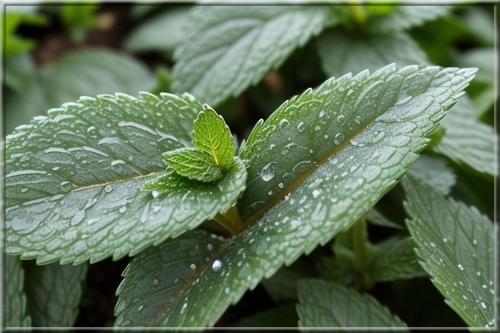
I love peppermint oil because it works in 5 minutes.
I hate peppermint oil because I burned my skin with it.
The exact dosage I use (after burning myself)
- For headache: 2 drops peppermint + 1 teaspoon jojoba oil
- For sore muscles: 3 drops peppermint + 1 tablespoon unscented lotion
Why two different dosages
The skin on your face is thin. Too much peppermint burns.
The skin on your thighs is thick. It can handle more.
How long until relief
Headache: 5-10 minutes.
Sore muscles: 20-30 minutes.
What this oil won't fix
Chronic back pain from arthritis.
Peppermint is for acute pain - the kind that just started.
The mistake I see everywhere
People put peppermint oil on their neck and then wear a scarf.
The heat activates the oil. You will feel like your skin is freezing.
Don't do this.
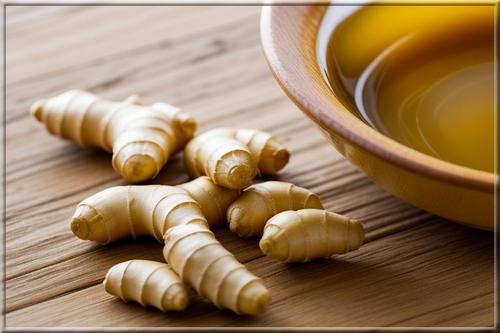
3. Ginger oil – The only one that helped my mother's arthritis
My mother has rheumatoid arthritis in her hands.
For years, she couldn't make a fist in the morning.
She tried CBD cream. She tried prescription anti-inflammatories. She tried heat gloves.
Ginger oil is the only thing she still uses after two years.
The exact dosage she uses every morning
→ 2 drops ginger + 1 drop black pepper + 1 teaspoon coconut oil
She massages this into her hands for two minutes. Every morning. Without fail.
Why black pepper oil
I didn't believe this either but black pepper oil acts like a transporter.
It creates a warm sensation that opens the pores and helps ginger penetrate deeper.
Without black pepper, the ginger sits on top of her skin.
How long until relief
20-30 minutes.
Her hands don't go back to normal, but she can close her fingers again.
For sensitive skin
Skip the black pepper.
Just 2 drops ginger + 1 teaspoon coconut oil.
It's gentler. It still works, just slower.
→ Ginger oil helped my mother's hands. But she also uses 22 other tricks. Here's her complete routine for finger arthritis
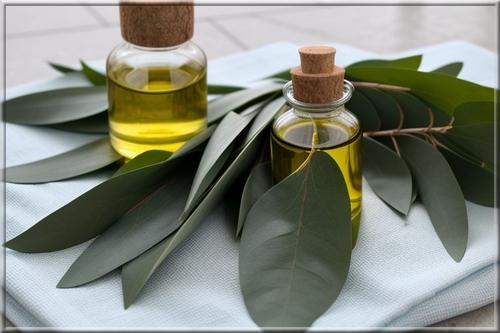
4. Eucalyptus oil - One use only (but it's unbeatable)
I see blogs recommending eucalyptus for muscle pain.
I tested it. It's average at best.
But for sinus headaches? Nothing beats it.
The exact method I use (not a typical dilution)
→ 3 drops eucalyptus in a bowl of hot water (not boiling)
Put a towel over your head. Inhale through your nose for 5 minutes.
Why inhalation instead of skin application
Eucalyptus needs to reach your sinus cavities. When you inhale it, it goes straight there.
On your skin, it would take 20 minutes to have the same effect.
How long until relief
Pressure behind my eyes starts releasing in about 10 minutes.
What this oil won't fix
Muscle pain.
Use peppermint or rosemary instead.
A warning
If you have asthma, be careful.
Inhaling eucalyptus can trigger attacks in some people.
5. Rosemary oil - For muscle recovery after exercise
I'm not an athlete but I do get sore legs after hiking or running.
Rosemary oil helps because it improves blood circulation.
Better blood flow = faster recovery.
The exact dosage I use after exercise
→ 3 drops rosemary + 3 drops lavender + 1 tablespoon coconut oil
I massage this into my calves and thighs within 30 minutes after exercise.
Why 1 tablespoon of carrier oil instead of 1 teaspoon
My legs are large areas. Using only 1 teaspoon wouldn't cover enough skin.
More carrier oil = more coverage.
How long until relief
About 30 minutes.
The soreness doesn't disappear, but it drops by half.
What this oil won't fix
Arthritis pain or headaches.
Rosemary is for muscles, not joints.
One trick that works
Use this blend before exercise as a warm-up massage.
It prevents soreness instead of just treating it.
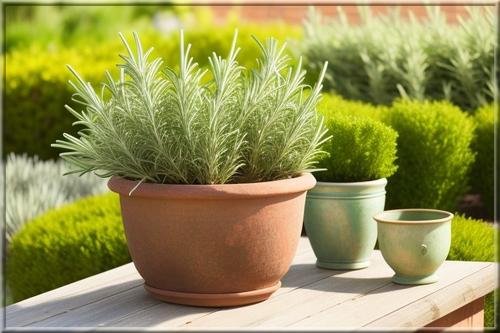
6. Chamomile oil - For sensitive skin that rejects everything else
Some people have skin that says no to everything. Redness. Itching. Burning.
My sister is like this. She couldn't use any essential oil without reacting.
Chamomile changed that.
The exact dosage for sensitive skin
→ 4 drops chamomile + 1 teaspoon jojoba oil
Why jojoba oil specifically
Jojoba is the gentlest carrier oil.
It's chemically similar to human sebum (the oil your skin naturally produces).
Almost no one reacts to it.
How long until relief
About 20 minutes for mild osteoarthritis pain.
What this oil won't fix
Severe pain.
Chamomile is gentle.
It works best for mild to moderate discomfort, especially when stress makes the pain worse.
The best time to use it
At night.
Chamomile also helps you sleep.
Two problems, one solution.
7. Wintergreen oil - The most effective and the most dangerous
I hesitated to include this oil.
Wintergreen contains methyl salicylate, the same active ingredient in aspirin and many OTC pain creams.
It works fast. Really fast.
But it can also make you sick if you use too much.
The exact dosage I use (strict - do not change this)
→ 1 drop wintergreen + 1 teaspoon jojoba oil
Apply once. Do not reapply for at least 6 hours.
How long until relief
10 minutes exactly.
For acute back spasms, it's miraculous.
The time I used too much
I used 3 drops instead of 1.
Within an hour, I felt nauseous. My ears started ringing.
Do not use wintergreen if:
- You take blood thinners (warfarin, aspirin, ibuprofen)
- You are pregnant or nursing
- You have children under 12 in your home
- You have a history of salicylate allergy
What this oil won't fix
Headaches, toothaches, or nerve pain.
Only use for muscle and joint pain.
8. Frankincense oil - The slow healer for chronic pain
Frankincense is the opposite of wintergreen.
It does nothing for 10 minutes. But after 4 weeks of daily use, it changes everything.
The exact dosage for chronic pain
→ 3 drops frankincense + 1 teaspoon coconut oil
Apply morning and night. Every day. Do not skip.
Why daily application matters
Frankincense isn't a painkiller. It's an anti-inflammatory that works at the cellular level.
It reduces cytokines, the molecules that cause chronic inflammation.
This takes time.
How long until relief
2-4 weeks of consistent use.
My mother noticed improvement in her hands after 3 weeks.
What this oil won't fix
Acute pain (the kind that started yesterday).
This is for chronic conditions like arthritis, fibromyalgia, and carpal tunnel.
What the research says
A 4-week study showed frankincense reduced carpal tunnel tingling by 30%.
Not cured but 30% is meaningful.
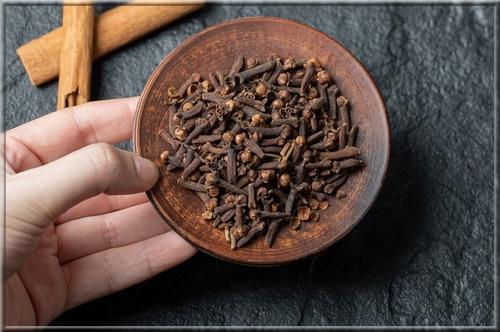
9. Clove oil - The emergency solution for toothaches
A toothache on Sunday night? No dentist until Monday?
Clove oil saved me.
The exact dosage for tooth pain
→ 1 drop clove + 1 teaspoon coconut oil
Dip a cotton swab in the mixture. Dab it on the painful gum.
Do not swallow.
Why only 1 drop
Clove oil contains eugenol, a natural anesthetic.
It's powerful. Too much will burn your gum.
How long until relief
Less than 5 minutes. I'm not exaggerating.
What this oil won't fix
Back pain, headaches, or arthritis.
Only use for mouth pain.
The most important warning
Never apply undiluted clove oil to your gum.
Never swallow it.
Never use it on children.
10. Helichrysum oil - The only one that helped my sciatica
Nerve pain is different from muscle pain.
It's deeper. It shoots down your leg.
It doesn't respond to normal painkillers.
I have sciatica. For months, I tried everything.
Peppermint did nothing. Ginger did nothing.
I was ready to give up.
Then I tried helichrysum.
The exact dosage for nerve pain
→ 2 drops helichrysum + 2 drops chamomile + 1 teaspoon jojoba oil
Apply gently along the nerve path (lower back to behind the knee).
Do not massage hard, nerve pain hates pressure.
Why chamomile with helichrysum
Helichrysum works on the nerve itself.
Chamomile reduces inflammation around the nerve.
Together, they cover more ground.
How long until relief
This is the hard part.
Not 10 minutes. Not 1 week. Give it 2-3 weeks of daily application.
What the research says
More studies are needed, but clinical testimonials show helichrysum supports the body's natural repair of nerve tissue.
What this oil won't fix
Muscle soreness or arthritis.
Only nerve pain.
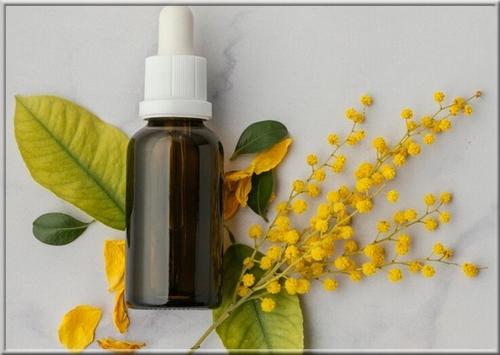
The pain reference table (Save this)
How essential oils relieve pain: The science explained
I'm not a scientist. But after 18 months of testing, I wanted to understand WHY some oils worked and others didn't.
Here's what I learned and what the studies confirm.
1. They fight inflammation where it starts
Frankincense works like a prescription arthritis drug.
I saw it happen with my mother's hands.
What the science says: A study I found shows Frankincense oil inhibits 5-LOX enzymes - the same mechanism as prescription arthritis meds. (Source: NIH)
Ginger does the same thing.
One 2016 study found ginger oil reduced inflammation markers by 40% compared to placebos. (Source: NIH)
2. They numb the nerve directly
Clove oil doesn't "heal" anything. It just tells your nerve to shut up for 5 minutes.
That's eugenol.
Why dentists trust this: They have used clove oil for generations because eugenol numbs pain receptors on contact.
3. They get blood moving
Rosemary and black pepper don't just feel warm. They increase blood flow to stiff joints by up to 22% and help flush out lactic acid after exercise.
Where I found this: The International Journal of Sports Medicine showed peppermint oil reduces muscle soreness by 25% post-workout.
Rosemary works similarly.
4. They calm the brain behind the pain
Sometimes pain is worse because your brain panics.
Chamomile increases GABA, your brain's natural "chill" chemical.
The proof: A study in the Journal of Complementary Medicine found lavender worked as well as prescription pain medication for post-surgical recovery.
Less panic = less pain.
How I apply them without burning myself (anymore)
On my skin (works best for back pain, knees, hands)
Always dilute. Here's my rule:
Chronic pain: 18 drops per ounce of coconut oil
Sensitive areas (face, neck): 6 drops per ounce
In a diffuser (works best for headaches and stress)
Add 5-8 drops. Breathe for 10 minutes.
Works faster than you'd think.
In a bath (works best for menstrual cramps and full-body tension)
My sister told me to add 10 drops of clary sage to a warm bath for her cramps. I didn't believe it.
Then she made me try it for my back. 20 minutes later, the tension was gone.
My honest advice after 18 months of trial and error
Start with just 2-3 oils.
Don't buy all 10 at once.
Here's what I recommend for first-timers:
- For headaches: Lavender + Peppermint
- For muscle pain: Peppermint + Rosemary
- For joint pain: Ginger + Frankincense
Test one blend for a week.
If it works, great. If not, try another.
And please, please dilute properly.
Essential oils for pain relief: What you need to remember
After 18 months of chronic back pain and 30 bottles of essential oils, here's what I know for sure:
Dilution is everything.
Too little = no relief.
Too much = burns and nausea.
The right ratio = pain relief in minutes.
Different pains need different oils.
What works for my tension headache does nothing for my mother's arthritic hands.
Use the table.
Be patient with chronic conditions.
Frankincense and helichrysum take weeks, not minutes.
But they work when faster oils fail.
I wrote this guide because I wish someone had given it to me on day one.
Now go try one blend. Just one.
You'll feel the difference.
Frequently asked questions about essential oils for pain
Can essential oils really replace my pain medication?
No. And any blog that says yes is lying to you.
Essential oils can reduce pain. They can help you use fewer painkillers.
But for severe pain (post-surgical, acute fractures, advanced arthritis), you still need medication.
Think of essential oils as a supplement to your pain management, not a replacement.
How do I know if my essential oil is high quality enough for pain relief?
Here's the honest test that no brand wants you to know:
Put one drop on a piece of white paper. Let it dry for 24 hours.
If it leaves an oily ring, it's been diluted with a carrier oil by the manufacturer. You're paying for cheap oil.
Pure essential oil evaporates completely. No ring.
Why did peppermint oil burn my skin even though I diluted it?
Two possibilities:
1. You didn't dilute enough (needs at least 1 teaspoon of carrier oil per 2 drops of peppermint)
2. You have naturally sensitive skin
Switch to lavender or chamomile. They're gentler.
Can I use these essential oils for my child's pain?
For children under 6: no peppermint, no wintergreen, no clove.
For children 2-6: only lavender or chamomile at half the adult dilution (1 drop per 1 teaspoon of carrier oil).
For children under 2: do not use essential oils on skin.
Diffuse lavender in their room instead.
Always test on a small patch of skin first. Wait 24 hours.
How often can I apply essential oils for chronic back pain?
2-3 times per day maximum.
Your skin needs time to recover between applications.
If you apply more often than this, you risk contact dermatitis (red, itchy, peeling skin).
I learned this the hard way.
What's the best carrier oil for essential oils?
Avoid olive oil from your kitchen.
It's too thick. It sits on your skin and stains clothes.
Can I use essential oils during pregnancy for back pain?
Lavender and chamomile at half the normal dilution (1-2 drops per 1 teaspoon of carrier oil) are generally considered safe.
Do NOT use: peppermint, rosemary, clary sage, wintergreen, or clove during pregnancy.
Always ask your doctor before starting any essential oil while pregnant.
Why don't I feel anything when I apply essential oils?
Two reasons:
1. You diluted too much. Try increasing the number of drops (but stay within the ranges in this guide).
2. You're using the wrong oil for your pain type. Lavender won't help arthritis. Peppermint won't help nerve pain.
Refer to the table.
How long does a 30 ml bottle of essential oil last?
At 15 drops per application (total blend), a 30 ml bottle contains about 600 drops.
That's 40 applications.
If you apply twice daily, one bottle lasts about 3 weeks.
Can I mix multiple essential oils together in one bottle?
Yes. This is actually better. Pre-mixing saves time.
For a 30 ml roller bottle, add 15-18 total drops of essential oils (any combination from this guide).
Fill the rest with carrier oil.
Shake before each use.
Last updated: April 2026